Join World's Fastest Growing B2B Network
Join World's Fastest Growing B2B Network

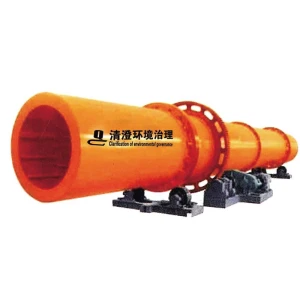


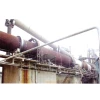
The rotary dryer, also known as the rotary cylinder dryer, consists of a slightly inclined and rotatable cylindrical body. It primarily comprises a rotary body, a lifting plate, a transmission device, a support device, and a sealing ring. It boasts a reasonable structure, excellent craftsmanship, high output, low energy consumption, and convenient operation. Our products are guaranteed to be of high quality, with our reputation being paramount. We offer free installation and commissioning services, and can handle consignment. You can compare our quality, service, and price with those of other factories. Currently, it is widely used in metallurgy, building materials, chemical industry, and other fields. Wet materials are transported to the hopper by a belt conveyor or a bucket elevator and fed from the top of the inlet. The cylinder serves as the main body of the dryer. As the materials pass through the interior of the cylinder, they enter and are dried by either cocurrent or countercurrent contact with hot air passing through the cylinder or effective contact with the heated wall surface. The dried products are discharged from the lower end of the other end. During the drying process, the materials move from the higher end to the lower end under the influence of gravity, aided by the slow rotation of the cylinder. A forward-facing rake is installed on the inner wall of the cylinder, which continuously scoops up and sprinkles the materials, greatly enhancing the heat contact surface of the materials, thereby increasing the drying rate and promoting the forward movement of the materials. After drying the materials with heat carriers (hot air, flue gas), the narrow dust is collected by a cyclone dust collector and then vented. The exhaust gas is also vented after passing through the cyclone dust collector. The rotary dryer is one of the oldest and most mature drying equipment. The diameter and length of the cylinder are determined by process conditions, reflecting the production capacity of the drying equipment. The load on the cylinder mainly consists of its own weight, lining quality, and material quality.
Compared with other dryers, the rotary dryer has the following advantages:
1. High production capacity, allowing for continuous operation;
2. Simple structure and easy operation;
3. Few malfunctions and low maintenance costs;
4. It has a wide range of applications and can be used to dry granular materials. It is also beneficial for materials with strong adhesion.
5. High operational flexibility allows for a wide range of fluctuations in product output without affecting product quality.
Scope of application of rotary dryer:
【Chemical industry】: Ammonium sulfate, sodium sulfide, calcium superphosphate, ammonium nitrate, urea, oxalic acid, potassium dichromate, polyvinyl chloride, nitrophosphate, calcium magnesium phosphate fertilizer, compound fertilizer. 【Food industry】: Glucose, salt, sugar, vitamin malted milk powder, granular sugar
[Mineral Products]: bentonite, titanium concentrate, coal, manganese ore, pyrite, limestone, peat
[Others]: Iron powder, flat soybeans, waste abrasives, matchsticks, wood chips, distiller's grains
One moment please
 Member's Area
 Messages
 Need Help





 Browse Through Millions of High-Quality Products.