Join World's Fastest Growing B2B Network
Join World's Fastest Growing B2B Network



| Port | Zhengzhou ,qingdao |
Paraffin blocks don't store themselves well. Stack them in a drawer and they slide around. Label them in boxes and you lose the box. And when your lab processes hundreds of tissue samples a week, the collection grows fast — faster than your filing system can keep up.
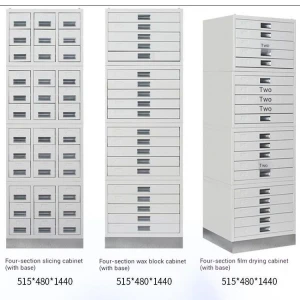
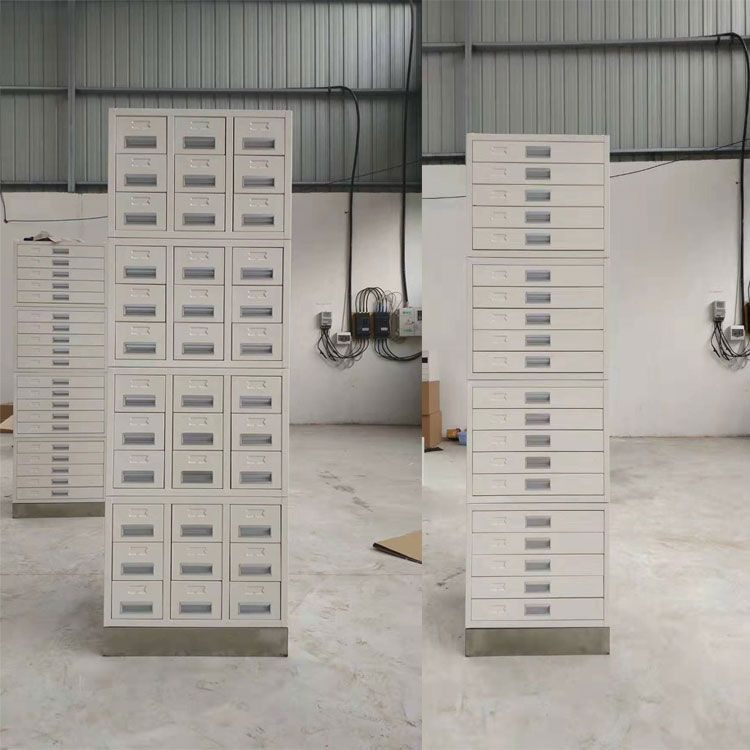
This cabinet is built for exactly that problem. It stores up to 14,840 standard paraffin blocks in a four-section unit, with each block sitting in its own dedicated slot. No stacking, no sliding, no lost blocks.
Most histology labs start with plastic bins or cardboard trays. They work fine for the first few hundred blocks. Then the problems start:
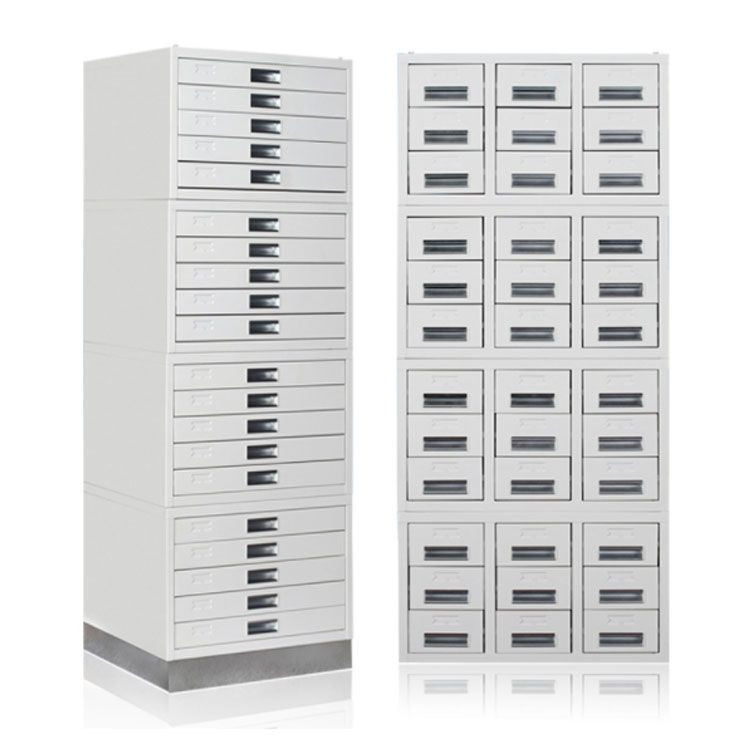
A proper paraffin block storage cabinet eliminates all of these. The grid slots hold each block vertically, separated from its neighbors. The steel body seals out dust. And the labeling system on each drawer front means you can find any block in under 30 seconds.
The cabinet body is formed from cold rolled steel with a thickness that holds its shape under load. The surface is finished with electrostatic powder coating — the same standard used on medical-grade equipment.
What this means in a real lab:
Labs that upgrade from plastic bins or wood shelving to steel cabinets report a measurable drop in block damage — fewer chipped corners, fewer cracked samples, fewer lost cases.
Single section: 3,710 paraffin blocks Full stack (4 sections): 14,840 paraffin blocks
Each section measures:
A mid-size histology lab processing 80–120 cases per day generates roughly 1,500–2,000 blocks per month. A single four-section cabinet holds 7–9 months' worth of blocks before you need to add capacity.
For large reference labs and third-party testing centers, the modular design means you can place two or three four-section stacks side by side, creating a dedicated wax block archive wall. Index by date, by case number, or by organ system — the drawer labels make it flexible.
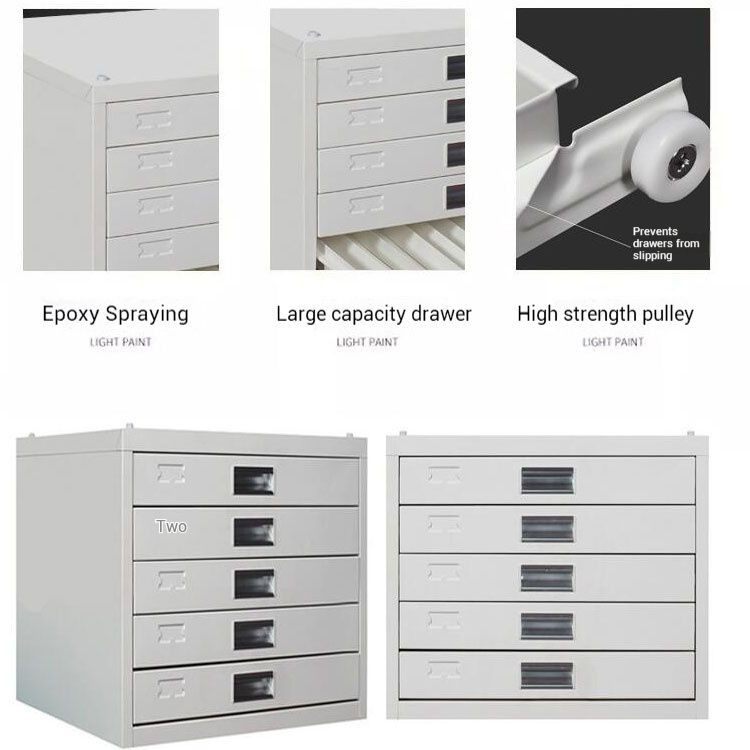
Inside each drawer is a partitioned grid with individual slots sized for standard paraffin blocks (7 mm thickness, standard cassette format). Blocks stand vertically — base down, top up — in their own compartment.
This design solves three common storage problems:
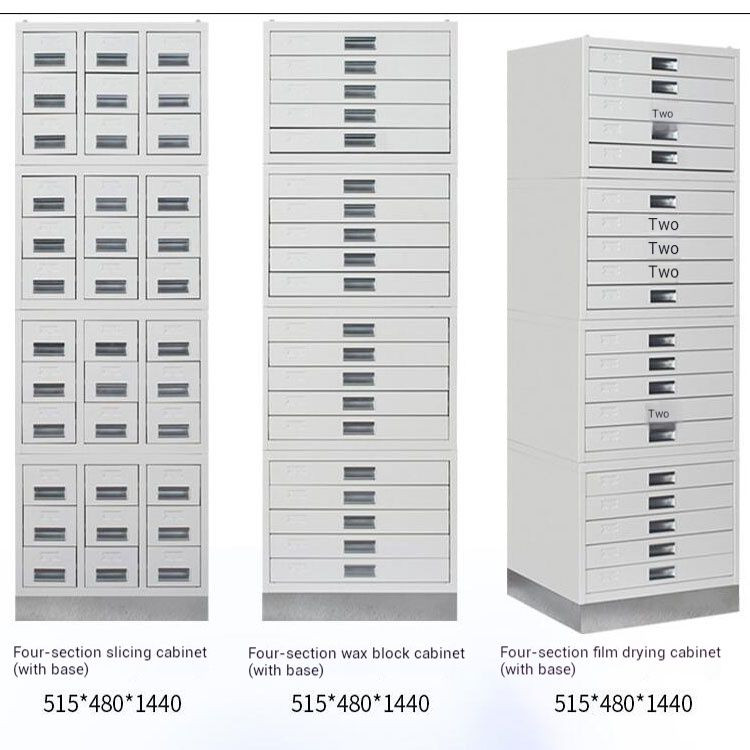
Same as the slide cabinet in our line — this unit uses a stackable modular system. Each section sits on top of the previous one, locked in place by interlocking corners. No tools, no bolts, no brackets.
Use cases:
The external dimensions are identical to our slide storage cabinet. That means you can place slide cabinets and block cabinets side by side or stack them in any combination — one slide stack next to one block stack, two of each, whatever your space requires.
Each drawer runs on ball-bearing slides — full extension, silent operation. You can pull a drawer completely out to access the back rows without strain.
The front of each drawer has a removable label holder. Use it for:
Labeling turns random storage into a real filing system. When your accreditation inspector asks how you track archived blocks, you point to the drawer labels and the index sheet.
The cabinet stands on a stainless steel base — not painted steel, not plastic feet. This matters because:
On standard painted-steel cabinets, the base is the first place to rust — usually within 2–3 years in a wet lab. Stainless steel eliminates that failure point.
| Hospital pathology department | Long-term paraffin block archive for diagnostic cases |
| Third-party clinical lab / testing center | High-volume block storage with retrieval speed requirements |
| University medical school | Teaching collection organized by pathology type |
| Research institute | Experimental tissue block storage with case-number tracking |
| Forensic pathology lab | Evidence block archive requiring secure, organized storage |
| Veterinary pathology lab | Animal tissue block storage — same cassette standard applies |
| Height | 360 mm (14.17") | 1,520 mm (59.84") |
| Width | 515 mm (20.28") | 515 mm (20.28") |
| Depth | 480 mm (18.90") | 480 mm (18.90") |
| Block Capacity | 3,710 blocks | 14,840 blocks |
| Block Orientation | Vertical, in partitioned grid slots | Same |
| Compatible Block Size | Standard 7 mm thickness paraffin cassette | Same |
| Material | Cold rolled steel, powder coated | Same |
| Base | Stainless steel | Stainless steel |
| Drawer Slides | Ball-bearing, silent, full extension | Same |
| Assembly | No tools needed, stackable | No tools needed |
| Shipping | Fully assembled per section | Sections stacked, ready to use |
Each section ships fully assembled. Open the box, place it on the base, stack the next section. That's it — no screws, no brackets, no assembly time.
Packing details:
For international orders, we pack by section to optimize shipping volume. A full four-section set ships on a standard pallet footprint.
Q: What size paraffin blocks fit in this cabinet? A: Standard histology cassettes, approximately 7 mm in thickness. The grid slots are sized for the most common cassette formats used in diagnostic and research pathology. If you use non-standard cassettes (oversized, deep-well, or specialty formats), contact us with dimensions before ordering.
Q: Can I store slides in this cabinet too? A: No — this cabinet is designed for wax blocks only. The grid slots are sized for vertical block storage, not horizontal slide placement. We manufacture a separate slide storage cabinet with grooved tracks for glass slides. Both cabinets share the same outer dimensions, so you can stack or place them side by side.
Q: How do I prevent blocks from sticking to the cabinet in hot weather? A: The grid slots keep blocks separated, which prevents surface-to-surface fusion. However, if your lab temperature exceeds 30°C (86°F) regularly, consider installing climate control. Paraffin softens at around 55–60°C, but even at lower temperatures, long-term storage in heat can cause surface degradation.
Q: Is the cabinet fire-resistant? A: The steel body provides inherent fire protection — it will not burn, melt, or release toxic fumes in a typical lab fire scenario. However, this is not a rated fireproof safe. For labs with specific fire safety accreditation requirements, consult your compliance officer.
Q: What is the MOQ? A: MOQ is 1 section. Order one to test, order a full four-section set for a new lab, or order multiple sets for a large facility.
Q: Do you offer OEM or color matching? A: Yes. We can match a specific RAL color for the powder coating, apply custom drawer labels with your lab's numbering system, or add your institution's logo. Minimum quantities apply for custom color runs — contact us for details.
Q: How long does the powder coating last? A: Under normal lab conditions (neutral cleaning, no abrasive scrubbing), the powder coating maintains its finish for 8–10 years. Avoid strong acids, strong alkalis, or solvent-based cleaners — these can damage the coating over time.
Need help calculating how many sections your lab needs? Send us your average daily case volume and we will recommend the right configuration.
One moment please
 Member's Area
 Messages
  Need Help



 Browse Through Millions of High-Quality Products.