Join World's Fastest Growing B2B Network
Join World's Fastest Growing B2B Network

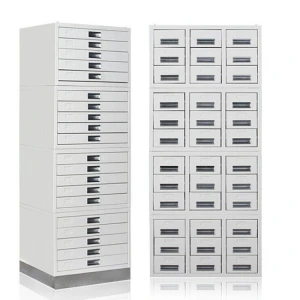


Glass slide storage is a daily headache in every pathology lab. Slides pile up. They get scratched. They get lost. And when you need to find a specific case from six months ago, you end up digging through drawers for twenty minutes.
This cabinet solves that.
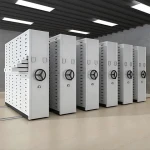
Built with cold rolled steel and designed around how a real pathology lab works, it stores up to 8,250 standard glass slides in a single four-section unit. Each slide sits in its own grooved track — no stacking, no friction, no damage.
Most labs start with cardboard slide boxes or generic storage drawers. It works — until the collection grows. Then you get:
A dedicated hospital pathology slide storage cabinet solves all of these. It's not just storage — it's part of your lab's workflow.
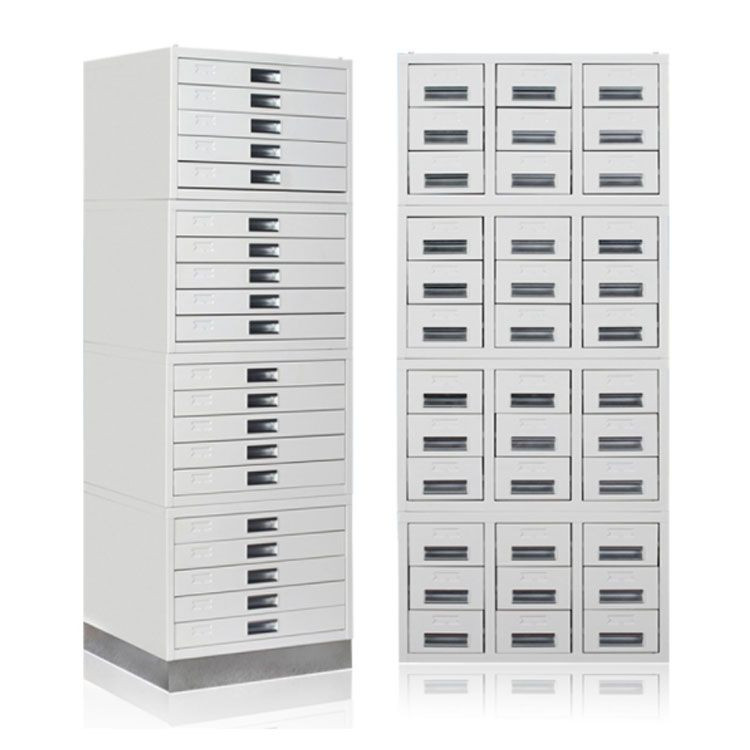
This isn't a consumer-grade cabinet. The body is formed from thick-gauge cold rolled steel, not thin sheet metal. The surface gets an electrostatic powder coating — the same finish used on medical equipment.
What that means in practice:
Labs that switched from wood or particleboard to steel report fewer contamination issues and longer cabinet life — often 10+ years with daily use.
Single section: 1,650 slides (one drawer unit) Full stack (4 sections): 8,250 slides
Each section measures:
The footprint is about the size of a standard office filing cabinet. A four-section stack reaches 1,520 mm (59.84") — just under counter height, so you can see over it in a lab with benchtop workspace.
For a mid-size hospital lab processing 50–100 slides per day, a single four-unit cabinet holds 3–4 months' worth of slides. Larger labs often put two or three cabinets side by side, creating a dedicated slide filing wall.
The inside is where this cabinet differs from a generic steel drawer.
Each drawer has individual grooved channels running front to back. Slides sit horizontally, one per channel, separated by a small gap for airflow. The grooves hold each slide in place — no sliding around when the drawer opens or closes.
Three benefits:
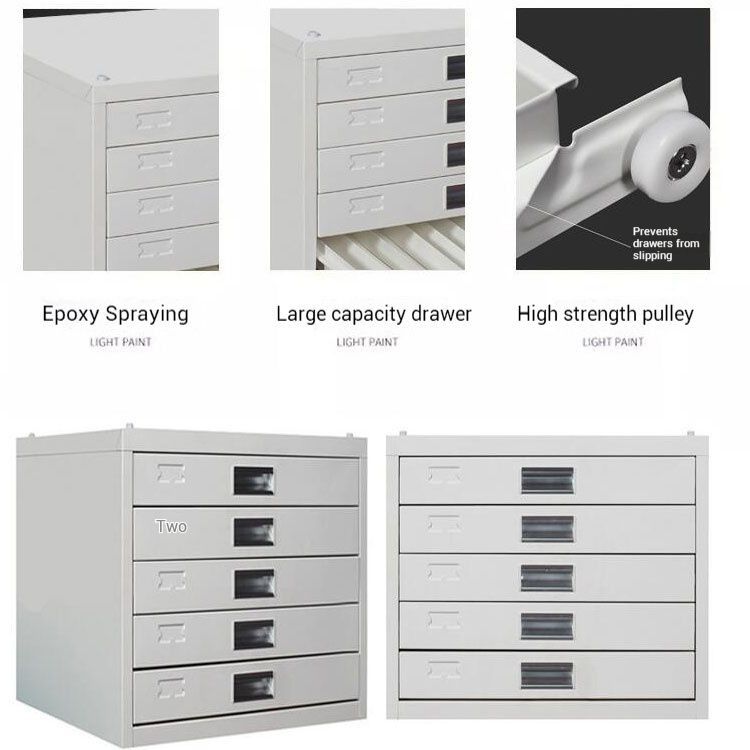
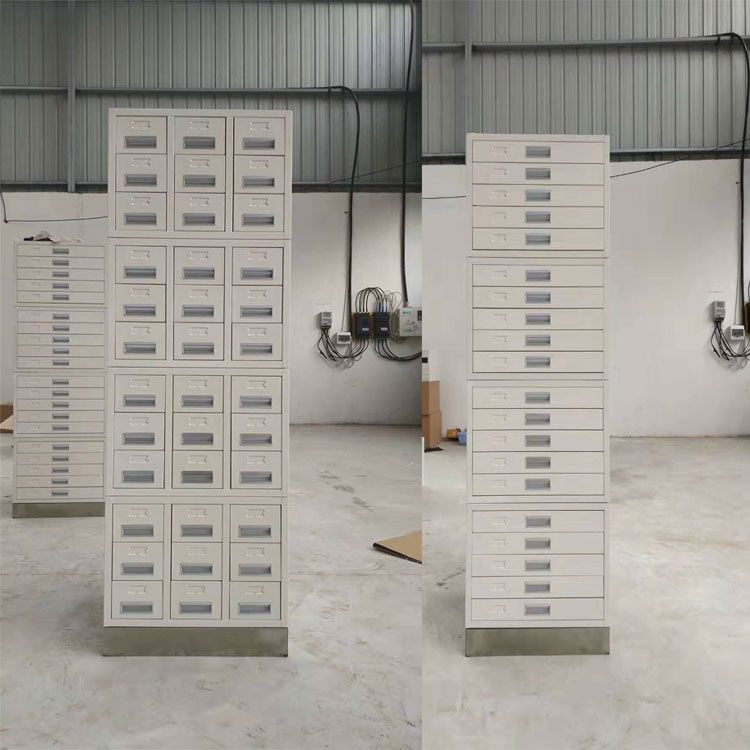
This is a stackable system. Each section sits on top of the next, aligned with interlocking corners. No tools needed for assembly — just align and stack.
Use cases:
The modular approach also means you don't over-buy capacity in year one. Add sections as your caseload grows.
Each drawer slides on silent ball-bearing rails — no squeaking, no jerking. Full extension lets you see the entire drawer contents at a glance.
On the front panel of each drawer is a label holder. Use it for:
Labeling is the difference between a "storage cabinet" and a "filing system." With labels, any staff member can find a slide without asking around.
The cabinet sits on a stainless steel base, not painted steel. This is the part of the cabinet closest to the floor — where mopping water, floor cleaners, and moisture accumulate.
On painted steel, the base chips and rusts within 2–3 years in a wet lab environment. Stainless doesn't. It adds about 80 mm (3.15") of ground clearance, which also makes leveling easier on uneven floors.
| Hospital pathology department | Daily slide storage and retrieval for diagnosis review |
| Clinical laboratory / testing center | Long-term slide archiving for quality audits |
| University medical school | Teaching slide sets organized by pathology topic |
| Research institute | Research case slide storage with case-number indexing |
| Veterinary pathology lab | Animal tissue slide storage — same slide size applies |
| Height | 360 mm (14.17") | 1,520 mm (59.84") |
| Width | 515 mm (20.28") | 515 mm (20.28") |
| Depth | 480 mm (18.90") | 480 mm (18.90") |
| Slide Capacity | 1,650 slides | 8,250 slides |
| Slide Orientation | Horizontal, in grooved tracks | Same |
| Material | Cold rolled steel, powder coated | Same |
| Base | Stainless steel | Stainless steel |
| Drawer Slides | Ball-bearing, silent, full extension | Same |
| Assembly | No tools needed, stackable | No tools needed |
| Shipping | Fully assembled per section | Sections stacked, ready to use |
Each section ships fully assembled. Open the box, place it on the base, stack the next section on top. No screws, no brackets, no assembly time.
The sections are packed with:
For international orders, we pack by section volume to minimize shipping cost. A full four-section set fits in a standard shipping pallet footprint.
Q: What size slides does this cabinet fit? A: Standard pathology glass slides, 7.8 cm (3.07") in length. The grooves are sized for the standard 25×75 mm slide dimensions. Microarray slides and larger-format slides may not fit — please confirm your slide size before ordering.
Q: Can I store both slides and paraffin blocks in the same cabinet? A: This model is for slides only. We manufacture a separate paraffin block cabinet with partitioned grid slots. Both cabinets share the same outer dimensions, so they can be stacked together in any combination.
Q: Is the cabinet fire-resistant? A: The cold rolled steel body provides basic fire protection — it won't burn or melt. But it is not a rated fireproof safe. For critical archives, consult your lab's fire safety requirements.
Q: What is the MOQ? A: MOQ is 1 section. We sell single sections, four-section sets, or any quantity in between.
Q: Do you offer OEM / custom labeling? A: Yes. We can print custom drawer labels, apply your lab's logo, or match a specific RAL color for the powder coating. Contact us with your requirements.
Q: How long does the powder coating last? A: With normal lab cleaning (neutral detergent, soft cloth), the powder coating lasts 8–10 years before showing any wear. Harsh chemicals or abrasive pads will shorten this. We recommend mild soap and water only.
One moment please
 Member's Area
 Messages
  Need Help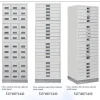


 Browse Through Millions of High-Quality Products.