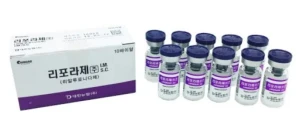
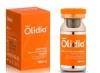
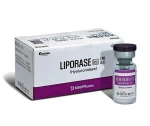
Liporase
Hyaluronidase Dissolves Hyaluronic Acid Liporase
Hyaluronidase To Remove Fillers
Hyaluronidase is an enzyme (compounded by special
pharmacies) that causes hydrolysis (breakdown) of
hyaluronic acid. It is often referred to as a reversal
agent for hyaluronic acid fillers. When the enzyme is
injected it dissolves the synthetic hyaluronic acid
filler, leaving your own intact. Liporase Hyaluronidase
is made in Korea. It is used to dissolve hyaluronic
acid based dermal fillers that have been placed
incorrectly, excessively, or unevenly.
Liporase can be used to dissolve Dermal Fillers or to
maximise the strength of lipodissolve
injections.Liporase,
also knowns as Hyaluronidase, is a tissue modifier
indicated as an adjuvant in subcutaneous fluid
administration for achieving hydration, to increase the
dispersion and absorption of other injected drugs, and
in subcutaneous urography for improving resorption of
radiopaque agents.Important
Info:
– Those with hypersensitivity to hyaluronidase or
any other ingredient in the formulation is not
allowed to use this product
– Discontinue recombinant (hyaluronidase human
injection) if sensitization occurs.
– Hyaluronidase should not be used to enhance the
absorption and dispersion of dopamine and/or alpha
agonist drugs.
– Hyaluronidase should not be injected into or
around an infected or acutely inflamed area because
of the danger of spreading a localized
infection.
– Hyaluronidase should not be used to reduce the
swelling of bites or stings.
– Hyaluronidase should not be used for intravenous
injections because the enzyme is rapidly
inactivated.
– Furosemide, the benzodiazepines and phenytoin
have been found to be incompatible with
hyaluronidase.
– Anaphylactic-like reactions following retrobulbar
block or intravenous injections have occurred,
rarely.
– Hyaluronidase should not be applied directly to
the cornea. It is not for topical
use.
Efficacy
and effect
Makes penetration of injection easy when
subcutaneous injection, intramuscular injection or
local anesthetics are injected under the skin to
improves capability of absorbing excessive body
fluid or blood in human organs.
! Before Use , dilute in 3-4 ml of 0.9% NaCl
solution (saline)
Products containing hyaluronidase are intended for
correcting unsuccessful results of beauty
injections and for solving some other esthetic
problems.
Main
advantages
High quality and safety.
Provides a possibility to remove some part of
filler after contour correction
procedures.
Efficiently removes some scar formations without
surgical interference.
Description
and composition
It is released in the form of a lyophilized
powder in 5 ml. vials. Product is available for
purchase in packages – 10 pieces in each. The
active component is a depolymerizing enzyme
hyaluronidase, an activity of 1500
c.u.
Product
purpose
Liporase inj. is used in aesthetic
medicine.
Indications
to using the product:
Overcorrection by fillers in contour
plastics;
Granulomas (nodular formations);
Fibro-sclerotic form of
cellulites.
Injections are made directly into the area of
correction. Following the injection there starts
the destruction of molecular compounds of
hyaluronic acid. Shorter oligomers are injected
naturally. The procedure result will be
noticeable following 2 days.
Composition:
Depolymerizing enzyme hyaluronidase 1500 c.u.
(activity is expressed in conditional
units)
To Dissolve Filler:
- Draw
1ml of saline solution 0.9%.
- To
dissolve more volume of filler, draw up 10ml of saline
solution 0.9%.
- Inject
the saline solution into the little bottle of Liporase
until it's full.
- Mix it
gently by rotating the Hyaluronidase bottle very
gently.
- Draw
back the mixed solution into the syringe.
- Inject
it slowly into the filler where needs to be
dissolved.
To maximise Lipodissolve
injections.
Same as above, but for fat dissolving injections, use
3ml of saline solution.
Please
note:
This is
just an overall description, it does not include
injection point, angle and needle sizes. Only place
your order if you have knowledge on it.
Important
Caution:
There have been a few reports that some people may have
an allergy
There
have been cases of severe allergic reaction when
injecting Hyaluronidase, although it's rare. Even so,
it's worth doing a test dose prior to the full
injection and wait to see if there's any allergic
reaction.