Join World's Fastest Growing B2B Network
Join World's Fastest Growing B2B Network

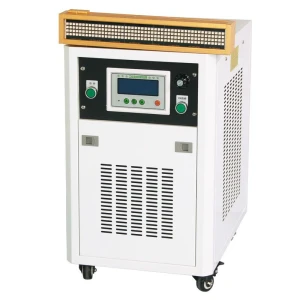


| Quantity | 1 - 1000 | 10 - 1000 |
| Price | 950 | 920 |
| MOQ | 1 set |
| Port | Choose the most suitable packaging method according to the distance of the destination, and you can communicate the packaging requirements. |
| Packaging | box |
| Lead Time | 3 |
| color | off-white | power | 3600w -6000w |
| voltage | 110 220 380 v |
How to double the curing effect of UV ink?
In the printing industry, UV ink curing technology has always been regarded as an important link to improve production efficiency and ensure the quality of printed materials. However, achieving the desired curing effect is not an easy task. This article will reveal the key factors that need to be considered in the UV ink curing process, helping you easily master this black technology and achieve a leap forward in printing effects!
1. The power and wavelength of the UV light source are the core factors affecting the curing effect of UV ink. UV ink requires specific wavelengths of ultraviolet light to effectively cure, so choosing a suitable light source is crucial. Generally speaking, the higher the power of the light source, the closer the wavelength is to the optimal absorption wavelength of UV ink (usually around 365nm), and the more ideal the curing effect. Therefore, when choosing UV curing equipment, it is important to pay attention to the power and wavelength parameters of its light source to ensure that it can meet the needs of ink curing.
2. Ink thickness is also one of the key factors affecting the curing effect. The curing speed of UV ink is usually inversely proportional to its thickness, that is, the thicker the ink, the slower the curing speed. Therefore, in the printing process, it is necessary to control the amount of ink and coating method reasonably to avoid incomplete curing caused by excessive ink thickness. Meanwhile, for thicker ink layers, the curing time and light source power can be appropriately increased to ensure that the ink can be fully cured.
3. Curing time is also an important factor to consider during the UV ink curing process. The curing time is too short, and the ink may not fully cure; If the curing time is too long, it may lead to problems such as ink aging and discoloration. Therefore, in practical operation, it is necessary to adjust the curing time reasonably according to factors such as ink type, thickness, and light source power to achieve the best curing effect.
4. The ink formula and printing materials can also affect the UV curing effect. The composition of additives and diluents in different ink formulations may vary, which can affect the curing speed and degree of ink. Therefore, when selecting ink, it is necessary to screen according to actual needs. At the same time, different types of printing materials have varying absorption and curing effects on UV ink, so when selecting printing materials, their curing performance should also be fully considered.
In addition to the above four key factors, there are also some other factors that can affect the curing effect of UV ink. For example, environmental temperature and humidity may affect the drying speed and curing degree of ink; Oxygen in the air may also react with certain components in the ink, affecting the curing effect. Therefore, in practical operation, it is also necessary to pay attention to controlling these factors to ensure that the ink can be cured smoothly.
There are many factors to consider during the curing process of UV ink, including light source power and wavelength, ink thickness, curing time, ink formulation, and printing materials. Only by fully understanding and mastering these factors can ideal curing effects be achieved in practical operations, improving the quality and competitiveness of printed materials.
One moment please
 Member's Area
 Messages
  Need Help


 Browse Through Millions of High-Quality Products.