Join World's Fastest Growing B2B Network
Join World's Fastest Growing B2B Network

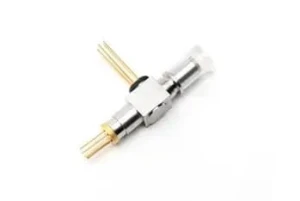


10G ONU BOSA Optical Sub-Assemblies for BiDi Optical Transceivers: Specs, Benefits, and Applications
A 10G ONU BOSA (Bidirectional Optical SubAssembly) enables high-speed PON access by combining transmit and receive functions into one compact module. In simple terms, a BOSA integrates a TOSA (Transmit Optical Sub-Assembly), a ROSA (Receive Optical Sub-Assembly), and a WDM filter so a single fiber can carry traffic in both directions on two separate wavelengths. This BiDi design delivers one standout advantage: it reduces fiber usage and lowers total network cost without sacrificing performance.
If you're designing or sourcing components for XGS-PON, XG-PON, or 10G EPON ONUs, the right BOSA can make your optics more efficient, easier to assemble, and more cost-effective at scale.
What Is a BOSA in a 10G ONU?
A BOSA is the core optical engine inside many bidirectional transceivers used in ONU/ONT devices. It merges:
TOSA: converts electrical signals into optical signals and launches them into the fiber
ROSA: converts incoming optical signals back into electrical signals
WDM Filter: separates (and combines) the upstream and downstream wavelengths so both directions can share the same fiber
Because the BOSA handles wavelength separation internally, it supports BiDi transmission over a single fiber strand, which matters in dense access networks where fiber availability and deployment costs are major constraints.
How BiDi Technology Works (Two Wavelengths, One Fiber)
BiDi transceivers rely on wavelength-division multiplexing (WDM) to send and receive simultaneously on a single fiber. The BOSA's WDM filter plays traffic cop: it routes the downstream wavelength to the receiver while combining the upstream wavelength from the transmitter into the same output path.
Why this matters for network economics
The most valuable benefit of BiDi optics is straightforward: you can deliver bidirectional connectivity while using fewer fibers. That can reduce:
fiber leasing and construction costs
cabling complexity in access cabinets and splitters
port count pressure in patch panels and ODFs
overall deployment time for last-mile and campus builds
In real-world rollouts, saving “just one fiber” per link often becomes a meaningful advantage when multiplied across thousands of subscribers.
Key Advantages of 10G ONU BOSA Optical Sub-Assemblies
1) Lower fiber cost with single-fiber BiDi optics
BiDi architecture helps network operators stretch existing fiber plant further. When fiber is scarce, expensive, or difficult to install, a BOSA-based BiDi solution can remove a major barrier to expansion.
2) Compact integration for ONU/ONT design
By combining TOSA, ROSA, and WDM optics into one sub-assembly, a BOSA supports compact layouts—ideal for space-constrained ONU products and high-volume manufacturing.
3) Designed for 20 km access networks
The configurations listed below target 20 km reach, aligning with common PON access deployment requirements.
4) Flexible connector options
Supporting SC/UPC and SC/APC connectors helps match different access network standards and reflectance requirements. APC is often chosen where back reflection must be minimized.
10G ONU BOSA Specifications (Optical Sub-Assembly)
Below are the available 10G ONU BOSA optical sub-assembly options and their key parameters, rewritten for clarity and fast comparison.
XGS-PON ONU BOSA (Symmetric 10G)
Product: XGS ONU
Part No.: SCGX2699-BUGA
Rate: 9.95G / 9.95G
Distance: 20 km
Connector: SC/UPC, SC/APC
Temperature Range: C, I
This option fits symmetric 10G PON designs where upstream and downstream both run at ~10G.
XG-PON ONU BOSA (Asymmetric 2.5G Up / 10G Down)
Product: XG ONU
Part No.: SCGX2629-BUGA
Rate: 2.5G / 9.95G
Distance: 20 km
Connector: SC/UPC, SC/APC
Temperature Range: C, I
This configuration supports asymmetric PON traffic profiles, often used where downstream demand dominates and upstream remains moderate.
Symmetric 10G EPON ONU BOSA
Product: Symm. 10G EPON ONU
Part No.: SCEX2677-BUGA
Rate: 10.3G / 10.3G
Distance: 20 km
Connector: SC/UPC, SC/APC
Temperature Range: C, I
This model targets 10G EPON symmetric operation with ~10.3G line rate in both directions.
Asymmetric 10G EPON ONU BOSA (1G Up / 10G Down)
Product: Asym. 10G EPON ONU
Part No.: SCEX3667-BUGA
Rate: 1.25G / 10.3G
Distance: 20 km
Connector: SC/UPC, SC/APC
Temperature Range: C, I
This version matches asymmetric 10G EPON deployments that keep upstream near 1G while boosting downstream capacity.
Understanding “C” and “I” Temperature Ranges
The table lists C and I temperature ranges. In optical access equipment, these commonly refer to commercial and industrial operating classes. selecting the right temperature class helps ensure stable optical performance in real deployments—especially in outdoor enclosures, street cabinets, or unconditioned spaces.
If you're unsure which temperature range your ONU requires, align it with the product's intended installation environment and compliance targets.
How to Choose the Right 10G ONU BOSA for Your Application
Match the PON standard and data rate
Start with the network standard you're building for:
XGS-PON: choose symmetric 9.95G/9.95G
XG-PON: choose 2.5G/9.95G
10G EPON (sym): choose 10.3G/10.3G
10G EPON (asym): choose 1.25G/10.3G
Confirm reach and optical budget needs
All listed options support 20 km, which fits typical access ranges. If your design needs different reach or margins, confirm optical budget targets at the system level (OLT optics, split ratio, connectors, splices, aging, and temperature).
Pick the connector style that fits your network
SC/UPC: common, cost-effective, widely used
SC/APC: better return loss performance for reflection-sensitive links
Consider manufacturing and integration requirements
A well-designed BOSA should simplify assembly, improve consistency, and reduce alignment complexity. That can translate into better yield and lower overall unit cost in volume production.
Why 10G BiDi Optics Keep Winning in Access Networks
Fiber is valuable. Installation is disruptive. Permits take time. BiDi transceivers powered by a capable 10G ONU BOSA offer a practical way to scale bandwidth while controlling rollout cost. By carrying two wavelengths on a single fiber, operators can expand capacity without doubling fiber consumption—and hardware teams can deliver compact ONU designs that remain competitive on cost and performance.
Summary: 10G ONU BOSA Modules Built for Cost-Efficient BiDi PON
A 10G ONU BOSA integrates TOSA + ROSA + WDM filter to enable bidirectional, dual-wavelength transmission over one fiber. That architecture reduces fiber spending, simplifies cabling, and supports modern PON standards with 20 km reach. Whether you're building for XGS-PON, XG-PON, or 10G EPON, selecting the right BOSA specification is a critical step toward a reliable, scalable access design.
If you want, share your target PON standard, connector preference (UPC or APC), and operating temperature needs, and I can help you pick the best-fit part number from the list.
There are many electronic crystal manufacturers, but we are one of the best choices for you.
One moment please
 Member's Area
 Messages
  Need Help


 Browse Through Millions of High-Quality Products.